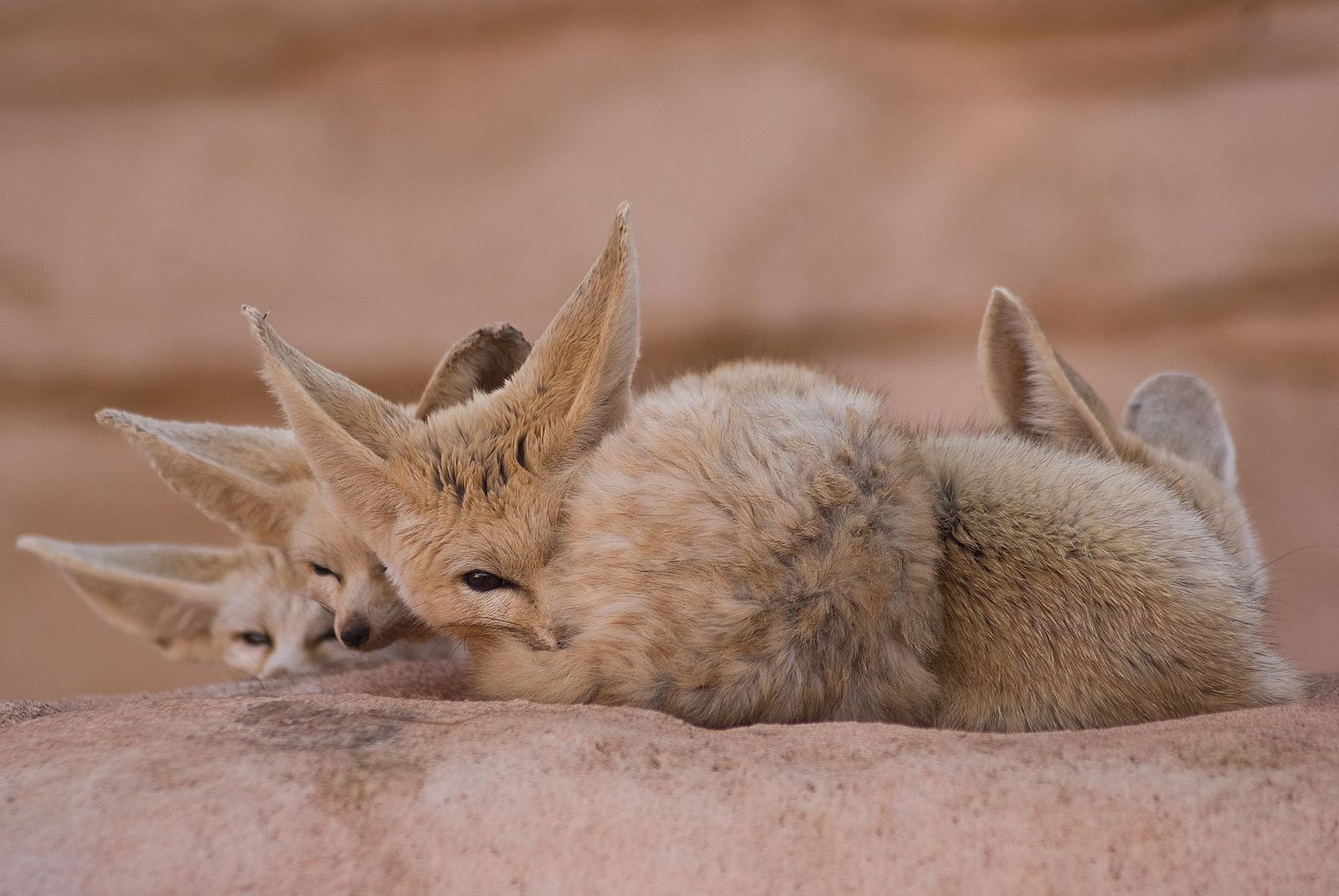

We’ve been having a heat wave where I live, so it was a good time to talk about one of my favorite desert animals: the fennec fox!
Fennec foxes (Vulpes zerda) are small foxes that live throughout the Sahara Desert and other desert and semi-desert habitats in North Africa. While they can survive in the sandy desert, fennecs need some vegetation around: they use desert plants or scrub to fortify and line their dens. Their name comes from Arabic.
The fennec fox is the world’s smallest fox species! The typical fennec is 9 to 16 inches long (29 to 41 centimeters) and weighs about 3.5 pounds (1.6 kilograms). Their long tail adds up to another 12 inches (30.5 centimeters) to a fennec’s overall length. For context, this is smaller than the average house cat! While they might be small, fennecs are incredibly agile. They can run up to 20 miles per hour (32 kilometers per hour) and jump up to three feet (1 meter) straight into the air.
Desert life
Fennec foxes are well-adapted to a desert lifestyle; in fact, they’re one of the only carnivores who can survive in the Sahara Desert. They have various adaptations to help them deal with the heat and lack of water in their desert homes.
First, fennecs have a beautiful, light-colored coat (they’re the lightest color of fox!). This light color reflects the sun off their body, helping to keep them cool. A fennec’s fur coat is also very thick. That may seem bad in the hot desert, but fennec foxes are nocturnal and mostly come out at night when the sun is down and the air is cold. A thick coat helps keep fennecs warm! When fennecs start to get warm, they use panting to help regulate their body temperature: their breathing can rise from 23 to 690 breaths a minute.
Thick fur also extends to a fennec’s feet and footpads. An abundance of fuzzy fur on their feet helps protect them while walking on the hot sand. This fur also serves as “sandshoes,” providing traction and giving fennecs stable footing as they run.

Finally, fennecs have adapted to need very little water (which is good news when you live in a desert!). They can go for long periods without having a significant water source nearby. Instead, they get almost all of their liquid by eating fruit and vegetation. Fennec foxes will also sometimes hydrate by licking condensation from the walls of their dens. Keeping their tongue curled in their mouths also helps conserve saliva, and they only start panting when it gets over 95 degrees Fahrenheit (35 Celsius).
Those ears!!!
When you look at a fennec fox, one of the first things you see is their enormous ears! Fennecs have the largest ear size relative to their body size among canids. The average ear is between 4 and 6 inches long, which can be almost half the length of their body.
Beyond being cute, these large ears are also crucial for a fennec’s lifestyle. For instance, they help fennecs cool off by dissipating heat. And perhaps more importantly, large ears play a critical role in finding prey – fennecs can easily hear food like insects or small rodents moving under the sand. After locating their prey, fennecs use all four of their feet to dig it up.
Because fennec foxes rely on their hearing to successfully hunt, they prefer to hunt alone. After all, noises from a hunting partner could easily distract you and cover up the sound of the prey you’re looking for.
Life in the Dunes
But hunting alone doesn’t mean you have to live alone! Fennecs are the most social fox species and live in communities of up to 10 individuals. These communities are found buried in the desert sand dunes. Fennec fox dens may stretch up to three feet deep into the sands, and dens may connect under the ground. The largest dens may reach 32 feet (10 meters) long and have multiple entrances and exits for quick escapes.


Fennecs spend most of their day sleeping and staying cool in their dens. This also helps keep fennec foxes safe from daytime predators. Since they’re so small, they’re an easy snack for large birds of prey or hyenas. Humans are also potentially dangerous predators since they trap fennecs to sell as pets or for their fur.
And to be clear, you shouldn’t have a fennec fox as a pet. Although they’re incredibly adorable, fennecs are highly social and need to be living with other fennecs to be happy. Their adaptations to the desert can also make it tricky to care for them in your house. So, while I would love to pet one, we should keep fennec foxes in the wild where they belong.
References
Leave a Reply