
Our household has been busy lately: we’re planning a trip to New Zealand in November! We’re super excited, and I’m particularly excited to see all the New Zealand-specific wildlife.
One animal I really want to see is the kiwi. Unfortunately, this might be hard. Kiwis are small, shy, nocturnal birds that live only in New Zealand. There are five species of kiwis, all in the genus Apteryx:
- The brown kiwi
- The green spotted kiwi (aka roroa)
- The little spotted kiwi
- The rowi
- The tokoeka
Kiwis are the smallest ratite, the group of flightless birds that includes emus and cassowaries. The typical kiwi is about the size of a chicken.
Where did kiwis come from? At some point, a bird traveled to New Zealand’s islands, where it evolved in relative isolation. This is common for island ecosystems: because they’re so hard to get to, animals that do make it to an island tend to evolve into many species to take over all the potential niches (like the finches in the Galapagos Islands).
The New Zealand landscape has changed multiple times, with the three islands (North Island, South Island, and Stewart Island) splitting apart, joining together, and getting submerged underwater at different points. Since kiwis can’t fly, these landscape changes separated different populations, and they eventually evolved into species specific to each local landscape.
Weird little guy
Islands are hard for mammals to reach, and New Zealand was no different. Before human settlement, the only mammals in New Zealand were some bat species and marine mammals on the coasts. Kiwis took over the “mammal spot” in New Zealand’s ecosystem in many ways. Although they are birds, kiwis have unique characteristics, many of which are more commonly found in mammals.
For example, kiwis live in underground burrows. They dig these out themselves using their strong feet and legs. These legs make up about a third of a kiwi’s total body weight and are also used for running and fighting.


Like most other ratites, kiwis can’t fly. While they have wings, they’re tiny and underdeveloped – only about 1 inch (3 centimeters) long. These wings are also tipped with a cat-like claw, just like the wings of some bat species. In addition to tiny wings, kiwis lack a keel on their sternum, or the structure where flight muscles attach in most birds. Finally, kiwis are too dense to fly; their bones are filled with marrow, just like mammal bones.
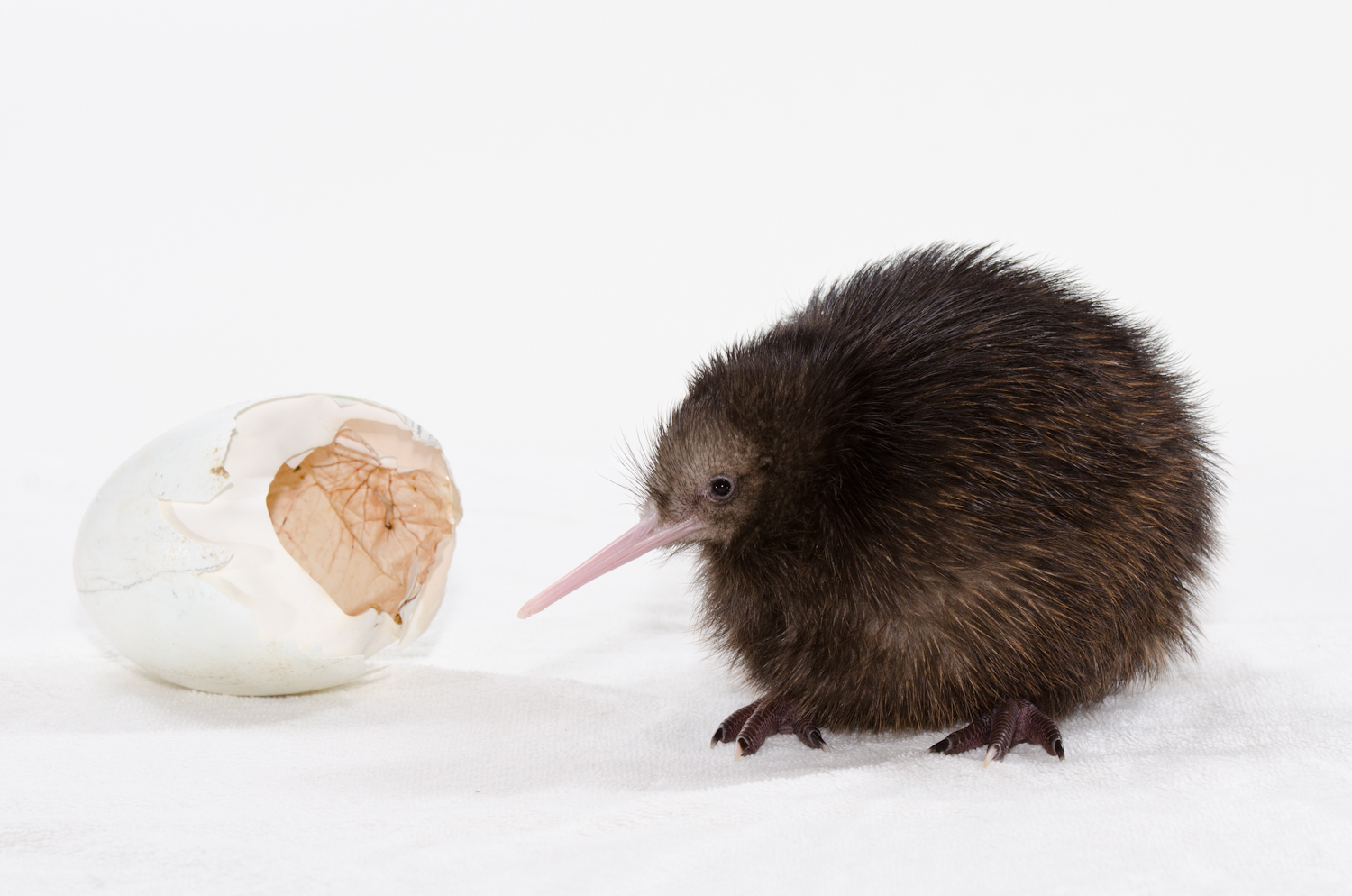
Kiwis also have weird feathers. Since they can’t fly, their feathers don’t look like typical bird feathers and are instead evolved for the kiwi’s ground-based lifestyle. Kiwi feathers are more like hair than typical bird feathers. Kiwis also have long feathers on their faces and at the base of their bill that act like whiskers when foraging for food in the dark.
And kiwis spend a lot of time running around in the dark! Most kiwis are nocturnal and spend most of their day sleeping deep in their burrows. When night falls, they creep out of their burrows and begin foraging for food. Kiwis hunt for worms and invertebrates using their highly developed sense of smell and sensitive bill. In fact, kiwis are the only birds with their nostrils at the tip of their bill! Unlike other birds, kiwis have an underdeveloped sense of sight and rely instead on their sense of smell and hearing.
Big eggs
When it’s nesting time, female kiwis lay eggs close to the same size as an ostrich egg. Remember, kiwis are only about the size of a chicken. This means that female kiwis lay eggs between 15 and 20% of their body! Kiwi eggs are one of the largest in proportion to body size out of any bird in the world. In comparison, an ostrich egg only takes up about 2% of an ostrich’s body.
Creating and carrying an egg this large requires a lot of energy. Females spend a lot of time in the breeding season eating to ensure they have the nutrients necessary for egg-laying. As the egg grows, the female starts to run out of room for her stomach to hold food, and she has to fast for two to three days. But don’t worry! The male helps incubate the egg after it’s laid so that the female can eat and regain her lost weight.
After being incubated for 75 to 85 days, the kiwi chick begins to kick itself out of its egg (unlike other birds, kiwis don’t have egg teeth on their bills, so they use their legs to escape the shell). The newborn chick is fully feathered and resembles a miniature of its parents. Unlike other birds, kiwi chicks aren’t fed by their parents. Instead, they gain nutrition from extra yolk attached to their abdomen in their early life. This external yolk sac is gradually absorbed over the first 10 days of life. It can sustain the chick if they’re unsuccessful in hunting. They’ll eventually begin hunting for food outside the burrow within a few days.

I won’t be in New Zealand at the right time to see a chick, and I’ll probably not see an adult, either (although we’ll try!). But there’s a good chance I’ll hear a kiwi calling in the night!
Resources
Leave a Reply