

Canids are some of my favorite animals – I love foxes and wolves! And while canids generally have the same body structure, some canids evolved disproportionately large body parts. Fennec foxes, for example, have huge ears.
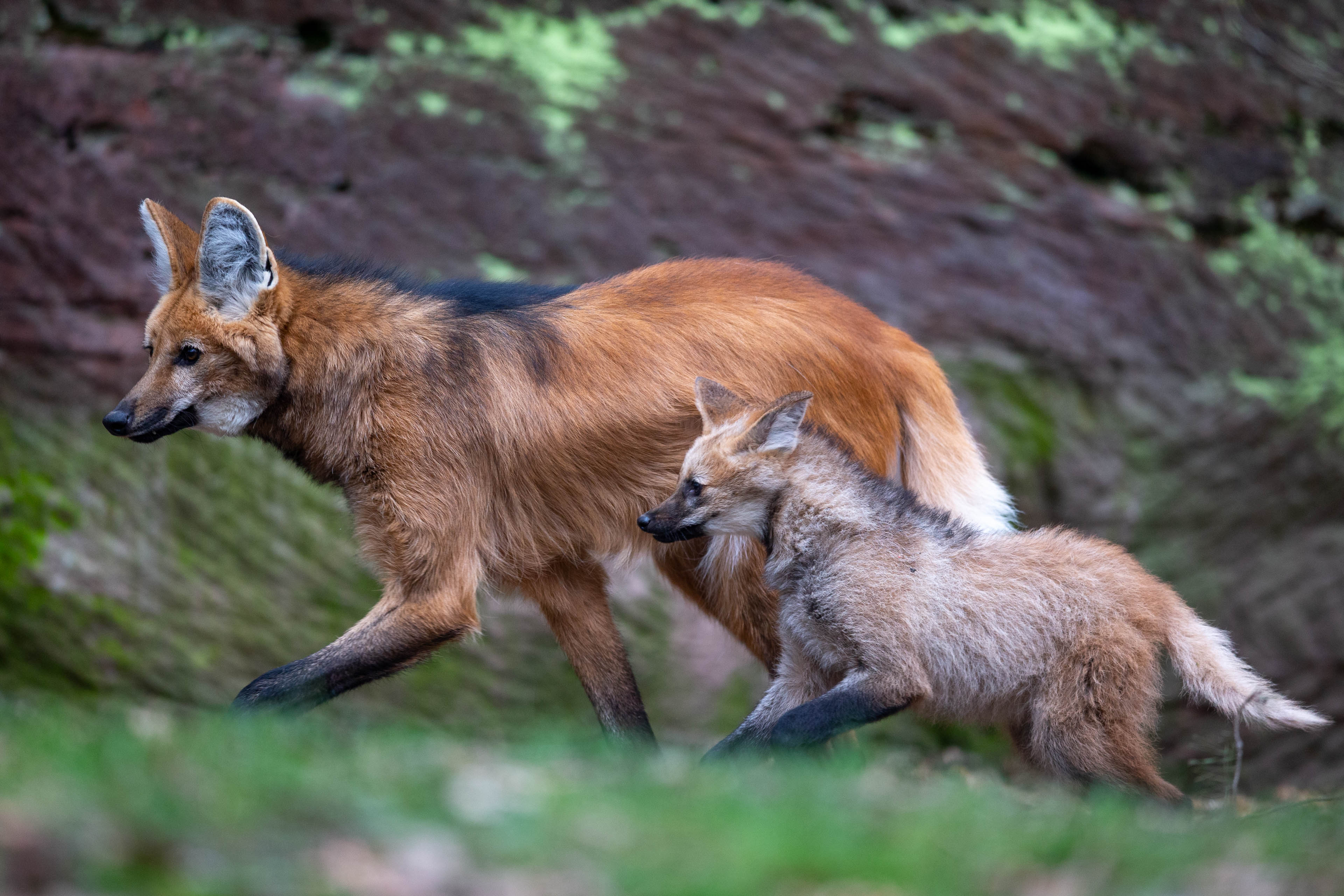
Today’s animal also has a large body part. Meet the maned wolf, a canid who has legs for days.
Maned wolves (Chrysocyon brachyurus) are the largest canids in South America. Covered in red body fur and black fur on their legs, maned wolves look more like long-legged foxes than wolves. In reality, maned wolves are something else entirely: they are the only members of their genus, Chrysocyon, and are most closely related to the stocky bush dog. Maned wolves get their name from the “mane” of dark black fur on their neck. This mane can be raised to make a maned wolf appear larger, like how a cat puffs its fur to ward off predators.
High on stilts
Maned wolves are tall, reaching about 3 feet (90 centimeters) at their shoulder on average. Most of that height comes from their long, thin legs, which likely evolved to help maned wolves hunt for small mammals like rabbits. Maned wolves live in open and semi-open habitats, some full of tall grass. Long legs help them see over the grass and find prey.

In addition to hunting small mammals, maned wolves eat whatever fruit or vegetable is currently in season. Long legs help them reach fruit hanging from branches high above their heads. Their favorite is a small, tomato-like berry called loberia, with which it has a mutually beneficial relationship. While maned wolves get a tasty berry to eat, loberia gets a ride through a digestive system, which tends to make it easier for them to germinate. In addition, maned wolves like to poop on leaf-cutter ant nests. The leaf-cutter ants use the feces for fertilizer and toss any loberia seeds into the colony garbage pile, where they can eventually grow into a fruit-bearing plant.
Lone wolf
Maned wolves are much less social than other large canids like wolves. They don’t form packs and instead live in monogamous pairs. Individuals in these pairs tend to live independently from each other, typically only coming together to mate once a year. After, the male retreats to his side of the territory so that the female can raise the pups alone.

Skunky smell
Maned wolves mark their territories through scent marking. Their urine has a powerful smell, and one you may be familiar with: the scent of marijuana or hops.
Urine is a popular tactic for scent communication, and animals like cats have a sulfur-based amino acid in their urine that creates a pungent smell. But maned wolves are different: their urine is unique among carnivorans in that it has high levels of 2,5-dimethylpyrazine, a type of pyrazine. This compound is intense and serves as a good way to mark territory.
It also apparently really smells like marijuana. In fact, the Dutch police were allegedly once called to the zoo to search for illegal pot smokers. The culprit turned out to be urine from the maned wolf exhibit.
Who knows? Maybe the pot smell outside your window is actually just a wild maned wolf (but probably not!).

Resources
Leave a Reply